


What is IndiaAI Mission? Objectives, Pillars, Components and Future Roadmap
- by Sync Life code Team

- March 19, 2026
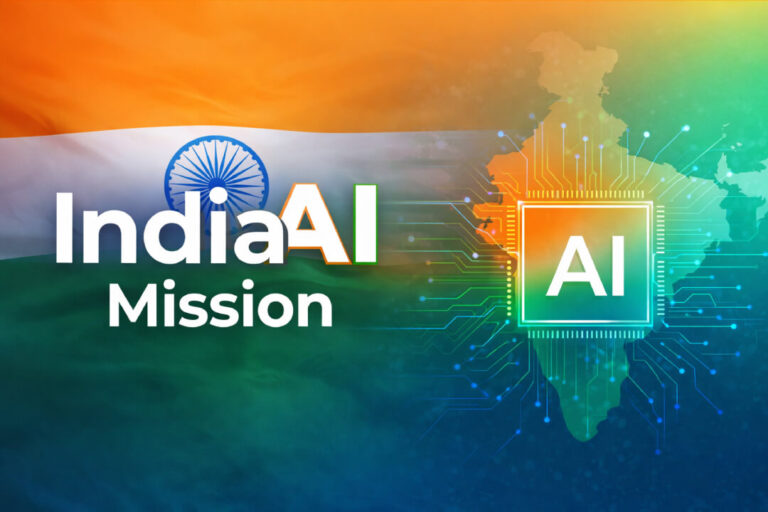
In this blog, we’ll dive deep into What is IndiaAI Mission, its objectives, core pillars, major components, and how it aims to shape India’s AI-driven future.
The IndiaAI Mission—approved by the Cabinet of India on March 7, 2024—is a nationwide initiative designed to strengthen India’s artificial intelligence capabilities. With a massive budget allocation of ₹10,372 crore, the mission aims to create a complete AI ecosystem that promotes innovation, builds compute infrastructure, supports startups, and encourages responsible use of AI technologies.
The mission is anchored by the vision of building “AI in India, for India,” ensuring that future technologies not only solve local challenges but also make India a global AI leader. Backed by the Government of India, this mission plays a key role in supporting India’s digital economy, research ecosystem, and emerging tech industries.
What is IndiaAI Mission?
The IndiaAI Mission is a strategic, multi-layered effort led by the Government of India to accelerate the adoption and development of artificial intelligence across the country. This mission focuses on building indigenous AI models, enabling access to high-quality datasets, strengthening compute power, and promoting research that directly addresses India’s unique socio-economic needs.
It’s not just about developing advanced technology—it’s about ensuring these technologies are accessible, scalable, and beneficial for every citizen.
Main Objectives of the IndiaAI Mission
The mission is structured around a set of powerful objectives that align with India’s long-term digital vision:
1. Build a Strong AI Compute Infrastructure
India plans to establish large-scale GPU compute facilities to support researchers, startups, and enterprises working on AI solutions.
2. Develop High-Quality Datasets & Indigenous AI Models
Through secure and well-organized datasets, India aims to boost innovation and support the development of locally-trained AI models that understand Indian languages, culture, and real-world challenges.
3. Foster AI Startups & Industry Collaboration
By creating a vibrant AI startup ecosystem, the mission encourages entrepreneurship, innovation, and public-private collaboration.
4. Promote Responsible & Ethical AI Adoption
Ensuring AI is used safely, transparently, and ethically remains a key priority—especially in public services like healthcare, education, and governance.
5. Strengthen India’s Global Position in AI
The mission aims to position India as a global contributor to AI research, innovation, and regulatory frameworks.
Pillars of the IndiaAI Mission
The mission stands on several foundational pillars designed to create a complete, future-ready AI ecosystem:
1. IndiaAI Compute
This pillar focuses on building large-scale GPU and compute capabilities to accelerate AI innovation. It will help researchers, developers, and organizations run high-performance AI workloads at affordable costs.
2. IndiaAI Datasets Platform
A centralized platform will provide access to high-quality, anonymized datasets. This will be extremely helpful for creating AI-driven solutions for sectors like healthcare, agriculture, education, and public service delivery.
3. IndiaAI Innovation Centre
A hub that encourages the creation of state-of-the-art AI models and tools, promoting innovation through industry partnerships, government research labs, and academic institutions.
4. IndiaAI Startup Financing
The mission will offer funding support to emerging AI startups, helping them develop scalable solutions that contribute to India’s digital growth.
5. IndiaAI FutureSkills Program
A training roadmap focused on building India’s AI-ready workforce through certifications, courses, and skill-development platforms.
Components & Future Roadmap of the IndiaAI Mission
The IndiaAI Mission includes several major components that collectively form the backbone of the country’s AI strategy.
Key Components
- National AI Portal Expansion – A comprehensive resource hub for AI research papers, tools, learning materials, and case studies.
- Trusted AI Framework – Guidelines and standards to ensure safe and responsible AI usage.
- AI in Governance – Deployment of AI systems for public service delivery and digital administration.
- Deep Tech Research Support – Grants for advanced research in machine learning, robotics, and emerging tech.
Future Roadmap
The future roadmap of the IndiaAI Mission includes:
- Building 10,000+ GPU Compute Capacity
This will make India a global hub for AI research and deep learning model training. - Expanding AI Innovation Centres Across India
These centres will act as incubators for creating world-class AI tools and multilingual models. - Integrating AI into Key Sectors
Such as:- Healthcare
- Agriculture
- Education
- Smart cities
- Fintech and cybersecurity
- Strengthening India’s Position in Global AI Policy
India aims to actively contribute to global AI regulation discussions, ensuring safe and inclusive technological growth.
Conclusion
The IndiaAI Mission is a landmark step toward building a self-reliant, innovation-driven AI ecosystem in India. Its focus on compute power, datasets, startups, innovation, and responsible AI makes it a game-changer for the country’s digital future. As AI continues to expand globally, this mission ensures that India not only keeps pace but leads with confidence.
If you’re someone exploring AI, WordPress development, or emerging tech, the IndiaAI Mission opens up endless opportunities to learn, experiment, and innovate.
Frequently Asked Questions
1. Can video games really improve problem-solving skills?
Yes, many studies suggest that certain types of video games—especially strategy, puzzle, and action games—can improve problem-solving skills. They train the brain to think critically, make quick decisions, and adapt to new challenges, which are essential for real-life problem-solving.
2. Which types of video games are best for improving brain skills?
Games that require thinking and planning are the most effective. These include strategy games, puzzle games, open-world games, and multiplayer team-based games. They help improve logical thinking, creativity, and decision-making abilities.
3. How do video games help in programming and development?
Video games enhance skills like pattern recognition, logical thinking, and problem-solving, which are crucial in programming. Gamers often find it easier to debug code, plan structures, and explore new technologies because their minds are trained to think analytically.
4. Are there any negative effects of playing video games?
Yes, excessive gaming can lead to issues like poor sleep, reduced physical activity, and lack of focus. However, when played in moderation, video games can be beneficial and even improve mental abilities.